

EBOO Therapy Explained: Can It Help Reduce Chronic Inflammation?
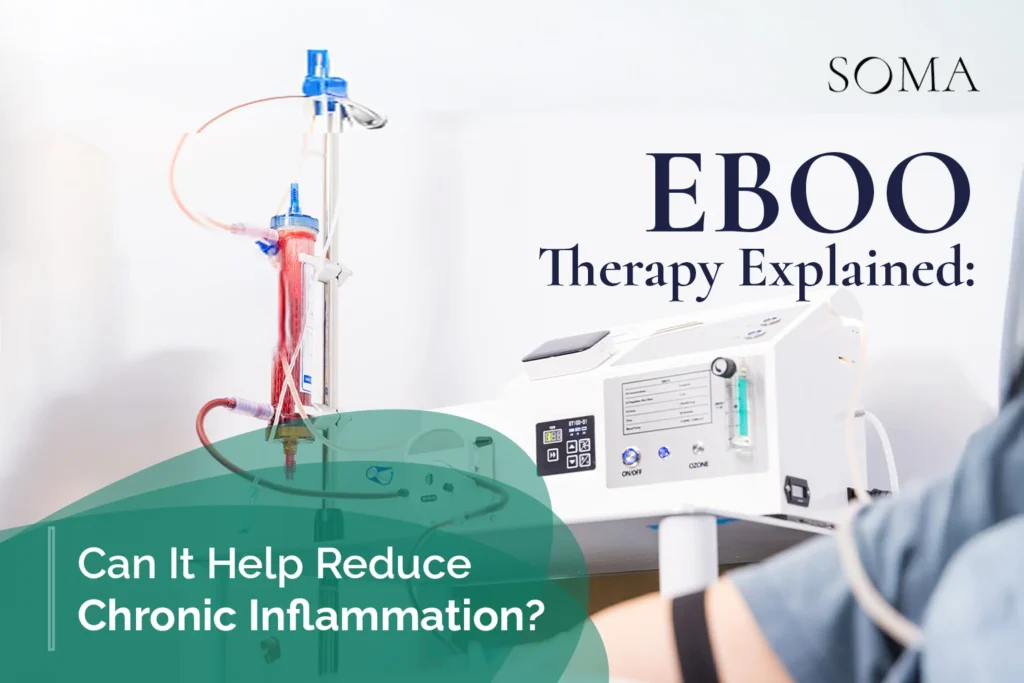
Chronic inflammation is at the root of many modern health conditions, including arthritis, heart disease and autoimmune illnesses. It discreetly promotes tissue deterioration, weariness and discomfort, often defying standard treatments. Enter EBOO Therapy or Extracorporeal Blood Oxygenation and Ozonation, a cutting-edge technique gaining popularity for its ability to tackle inflammation at its source. But does science support its claims? This blog explains what EBOO is, how it differs from typical ozone therapy and looks at the data for its role in reducing chronic inflammation.
What Is EBOO Therapy?
EBOO Therapy is a significant advancement in ozone-based treatments. It operates by drawing up to 4.8 litres of blood from the body through an intravenous line. This blood is then sent via a specialist machine that resembles dialysis equipment. It goes through filtration to remove poisons, germs and inflammatory material. Medical-grade ozone gas, mixed with pure oxygen, is pumped into the blood at precise concentrations, usually 0.5 to 1 microgram per millilitre. The procedure oxygenates red blood cells, boosts antioxidant synthesis and allows pure blood to circulate uninterrupted. In simple layman term, blood is continuously withdrawn and returned in a closed-loop system.
A normal session lasts 45-60 minutes. Although outcomes vary, certain individuals begin experiencing positive shifts in vitality and mood within the first one to two sessions. EBOO, developed in Europe in the early 2000s, is based on ozone therapy principles but is significantly scaled up. Unlike simple injections, it uses a complete blood volume equivalent to achieve systemic cleansing and immunological recalibration.
EBOO Vs Traditional Ozone Therapy
Ozone therapy dates back to the 1930s and is used for disinfection and mild autohemotherapy, in which only 250 millilitres of blood are taken, ozonated and reinjected. Rectal insufflation, joint injections and IV drips are all possible methods. These provide ozone locally or in small dosages, making them ideal for treating acute conditions such as infections or wounds.
EBOO distinguishes out for its ability to handle continuous, high-volume blood flow. In some forms, ozonation is combined with haemofiltration to better filter out microclots, lipids and cytokines. Proponents say that this enhances ozone’s biphasic action: initial oxidative stress causes a rebound in antioxidants such as glutathione and superoxide dismutase, which modulates immunity.
The Science Behind EBOO’s Anti-Inflammatory Effects
To understand how EBOO may affect inflammation, we must examine how ozone interacts with blood on a biological level.
Medical ozone (O₃) at controlled quantities reacts rapidly with plasma lipids and antioxidants. This reaction produces short-lived compounds called ozonides and lipid oxidation products. When delivered in therapeutic doses, these compounds function as biological signalling messengers rather than poisons.
One of the most important routes active is the Nrf2 (Nuclear factor erythroid 2-related factor 2) pathway. Nrf2 is a transcription factor that controls the production of endogenous antioxidants including glutathione, catalase and superoxide dismutase. Nrf2 activation aids the body’s defence against oxidative stress, which is intimately related to chronic inflammation.
At the same time, controlled oxidative signaling may help modulate pro-inflammatory cytokines such as:
- IL-6 (Interleukin-6)
- TNF-α (Tumor Necrosis Factor-alpha)
- CRP (C-reactive protein)
These markers are often increased in chronic inflammatory conditions.
A 2022 review of oxygen-ozone therapy published on PubMed Central, “Oxygen-Ozone Therapy for Reducing Pro-Inflammatory Cytokines” (PMC8910188), examined how ozone therapy can reduce inflammatory cytokines while increasing antioxidant capacity.
There is also evidence that ozone therapy may improve endothelial function, or the health and responsiveness of the blood vessel’s inner lining. Endothelial dysfunction is a crucial factor in cardiovascular inflammation and atherosclerosis.
Furthermore, these pathways are dose-dependent. Ozone, at controlled medicinal concentrations, functions as a regulated oxidative stimulation rather than causing uncontrolled oxidative damage.
Clinical Evidence: Strengths and Studies
The landmark study remains a 2005 randomised controlled trial by Di Paolo et al., involving 28 patients with peripheral artery disease (PAD). Participants received either EBOO (three sessions weekly for seven weeks) or prostacyclin infusions. EBOO excelled: skin lesions regressed significantly (p<0.001), pain, pruritus and leg heaviness eased markedly and subjective well-being soared. No vascular changes occurred and 210 total sessions proved safe.
Earlier safety trials (2000-2005) treated more than 82 patients with PAD, cardiac problems and hepatitis C, proving tolerance at therapeutic levels with no harm. Bocci’s 2005 assessment emphasised EBOO’s biological plausibility, which activates immunological and endothelial cells through regulated oxidation.
A meta-analysis from Aspen Medical Centre (12 studies, 2020-2024; 1,247 patients) found 67% energy gains after one to three sessions and 85% total improvement after the program. Related ozone studies, such as a 2022 study of pro-inflammatory cytokines, suggests improvements in osteoarthritis and low back pain.
Practical Applications and Patient Outcomes
Clinics offering EBOO report use in patients experiencing:
- Chronic fatigue syndromes
- Fibromyalgia
- Autoimmune-related inflammation
- Post-viral recovery
- Persistent inflammatory states
Some patients report improvements in:
- Energy levels
- Mental clarity
- Joint discomfort
- Exercise tolerance
Because EBOO processes a large blood volume, proponents believe it offers a more systemic reset compared to small-volume ozone therapies.
However, outcomes vary depending on underlying condition, metabolic health and overall treatment strategy.
EBOO is typically used as part of a broader plan that may include nutritional therapy, lifestyle optimisation and conventional medical care where necessary.
Is EBOO Worth Considering? And How We Use It at SOMA Wellness
Chronic inflammation is rarely caused by one single factor. It builds slowly, influenced by stress, metabolism, environment and immune signaling. Because of that, treatment often requires more than a single pill.
EBOO is being explored as part of that broader approach. The current research base is still growing, but early clinical studies and physiological data suggest it may help support inflammatory regulation and oxidative balance in selected patients. It is best viewed as supportive, not standalone.
At SOMA Wellness, we integrate EBOO only after careful medical evaluation. We use it as part of a structured recovery strategy, especially for individuals experiencing persistent fatigue, inflammatory overload or prolonged recovery.
- Our approach focuses on:
- Restoring cellular energy efficiency
- Supporting balanced immune response
- Improving oxygen utilisation
- Strengthening systemic resilience
We believe that innovative medicines deserve enhanced oversight. Certain protocols are only supplied following a physician’s evaluation and when clinically suitable.
For the right person, at the right time, EBOO can be a significant step in regaining momentum in health. As science advances, so does our ability to use it more precisely and responsibly.
References
- Di Paolo N, et al. (2005). Extracorporeal blood oxygenation and ozonation (EBOO): a controlled trial…
https://pubmed.ncbi.nlm.nih.gov/16288443/
- Bocci V., et al. (2005). Extracorporeal blood oxygenation and ozonation: clinical and biological implications…
https://pubmed.ncbi.nlm.nih.gov/16156950/
- Oxygen-ozone therapy review (2022). Effects on pro-inflammatory cytokines.
https://pmc.ncbi.nlm.nih.gov/articles/PMC8910188/
- Case report of toxin reduction post-EBOO (2025).
https://pmc.ncbi.nlm.nih.gov/articles/PMC12826612/
FAQs
1. Is EBOO therapy scientifically proven?
Early clinical studies on EBOO therapy have demonstrated a strong safety profile and promising biological effects, particularly in vascular and inflammatory conditions. While many of the current studies are small, the growing body of research continues to build encouraging momentum, with larger randomised controlled trials anticipated as interest expands. EBOO is increasingly being recognised as a valuable integrative therapy that complements conventional treatments and supports overall vascular and systemic health.
2. How is EBOO different from regular ozone therapy?
Traditional ozone therapy usually treats a small amount of blood or delivers ozone locally. EBOO processes a much larger blood volume in a continuous, controlled system. Because of this, it is considered a more intensive and systemic form of ozone therapy.
3. Can EBOO therapy reduce chronic inflammation?
Studies suggest that ozone therapy may help manage inflammatory indicators including CRP, IL-6 and TNF-alpha by stimulating the body’s antioxidant mechanisms. While first findings are promising, the outcome varies depending on the individual and underlying health condition.
4. Is EBOO therapy safe?
When performed under appropriate medical supervision and established clinical protocols, EBOO has demonstrated a favourable safety profile in early studies. It is not suitable for every individual and requires proper medical screening. At SOMA Wellness, all patients undergo a physician-led evaluation before treatment and the procedure is conducted in a controlled clinical setting with continuous monitoring to ensure safety and suitability.


Leave a Reply