

Are You Ageing Faster Than You Should Be? Understanding Premature Ageing
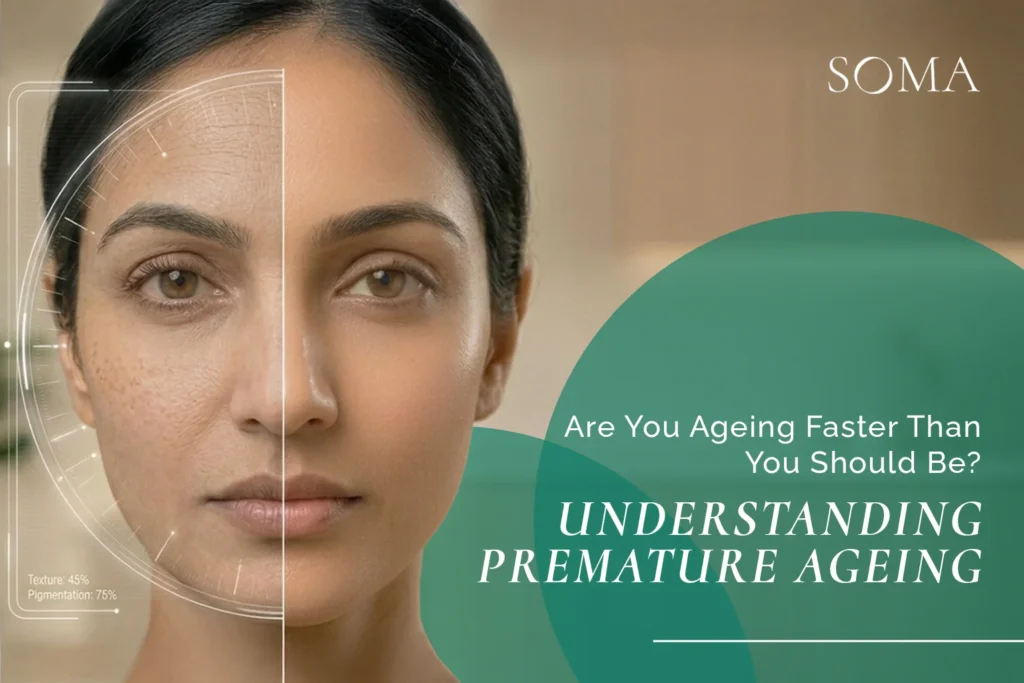
Time moves quietly. It leaves no visible trail as it passes. Yet the body keeps an account.
Lines appear. Energy shifts. Sleep feels different. Recovery takes longer than it once did. These changes form a pattern that most people simply call ageing.
For many years, age was treated as a number tied to a date of birth. Scientific research now separates chronological age from the biological age. Chronological age counts years. Biological age reflects how well the body is functioning at a cellular level.
In 2013, researchers described what they called the “hallmarks of ageing” in the journal Cell. These hallmarks include DNA damage, mitochondrial decline, cellular senescence, and chronic inflammation. These processes develop gradually, yet their speed varies between individuals.
Two people of the same age can show very different biological profiles. One may have resilient metabolic markers and strong recovery capacity. The other may display early strain in similar systems. This variation has led scientists to examine the idea of premature ageing.
What Is Premature Ageing?
Premature ageing refers to biological changes that occur earlier or progress more rapidly than expected for a given chronological age. It concerns internal processes rather than appearance alone.
One widely studied indicator of ageing is telomere length. Telomeres sit at the ends of chromosomes and protect genetic material during cell division. With each division, telomeres shorten slightly. Over time, this shortening contributes to cellular ageing. Research published in PNAS demonstrated that chronic psychological stress was associated with shorter telomeres. This finding suggested that lifestyle and environment can influence biological ageing.
Another development in ageing science is the epigenetic clock. In 2013, Steve Horvath introduced a method of estimating biological age by analysing patterns of DNA methylation. These chemical modifications act like markers that reflect cellular history. When methylation age exceeds chronological age, it may indicate accelerated ageing.
Inflammation also plays a central role. Scientists use the term inflammaging to describe the gradual rise in inflammatory activity that accompanies ageing. Persistent low-grade inflammation contributes to cardiovascular disease, metabolic dysfunction, and cognitive decline.
Premature ageing therefore reflects a shift in how quickly these biological mechanisms unfold.
Signs That Ageing May Be Accelerating
Ageing rarely arrives in a dramatic way. It tends to settle in quietly. A little less energy in the morning. Muscles that feel slower to recover. An afternoon slump that did not exist a few years ago. The changes are small, yet they linger.
Ongoing fatigue is one of the most common concerns after the age of thirty. It is different from feeling tired after a late night. This kind of fatigue can sit in the background even after rest. The World Health Organization recognises chronic fatigue syndrome as a medical condition, yet many people experience steady exhaustion without meeting formal diagnostic definitions. Scientific studies have explored possible explanations, including low-grade inflammation and reduced efficiency in the body’s energy systems.
Energy production happens inside cells, within structures called mitochondria. They act as microscopic power stations. As mitochondrial performance declines with age, the supply of cellular energy can decrease. Research published in Molecular Cell describes mitochondrial dysfunction as a central feature of the ageing process. When energy becomes less available, ordinary tasks can begin to feel unexpectedly demanding.
Hormonal shifts add another dimension. During perimenopause, levels of oestrogen and progesterone gradually fluctuate. In men, age-related testosterone decline, often referred to as andropause or male menopause, may influence strength, mood, and vitality. A study in the New England Journal of Medicine reported associations between lower testosterone levels and reduced physical function in older men.
Sleep often changes alongside these hormonal adjustments. Falling asleep may take longer. Waking during the night becomes more common. Research has linked shorter sleep duration with reduced telomere length and increased inflammatory markers. Over time, broken sleep can place additional pressure on already strained biological systems.
Each of these signs can occur for many reasons. When several appear together and persist, they may suggest that the body is carrying a heavier biological load than expected for its age.
Why Does Ageing Accelerate?
The causes of ageing involve overlapping pathways rather than a single trigger.
Chronic stress influences hormonal balance and immune function. Elevated cortisol over extended periods can affect metabolic stability and tissue repair. The earlier study on stress and telomeres highlighted this connection.
Oxidative stress provides another explanation. During normal metabolism, cells produce reactive oxygen species. In balanced amounts, these molecules are manageable. When antioxidant defences fall behind, oxidative damage accumulates. A review in Clinical Interventions in Ageing outlined the link between oxidative stress and age-related disease.
Lifestyle factors matter. Sedentary behaviour reduces mitochondrial density and metabolic efficiency. Exercise research consistently shows improvements in mitochondrial function following regular physical activity.
Hormonal shifts further shape ageing trajectories. Oestrogen and testosterone influence bone density, muscle mass, mood regulation, and fat distribution. Gradual decline can alter physical and cognitive resilience.
Ageing, therefore, reflects cumulative biological wear. When stress, metabolic imbalance, and hormonal shifts converge, early ageing may emerge.
Senescent Cells and the Biology of Ageing
As cells are damaged, they enter a state known as senescence. Senescent cells stop dividing yet remain physiologically active. They release inflammatory chemicals into the surrounding tissues.
According to studies published in Nature Medicine, the accumulation of senescent cells causes tissue dysfunction and persistent inflammation. Removing these cells from animal models improved physical health markers. Human trials are still ongoing, and long-term results are being examined.
Senescent cells have become a hot topic in longevity research. Scientists are still looking at whether targeting these cells can promote healthier ageing patterns under good medical care.
Can Biological Age Be Influenced?
Ageing is a natural biological process, yet the rate at which it occurs varies greatly across individuals. According to longevity science research, biological ageing is regulated by various interconnected systems in the body, such as metabolism, hormones, inflammation and cellular energy generation.
Physical activity plays a major role in maintaining these systems. Exercise helps improve mitochondrial function, supports insulin sensitivity, and preserves muscle mass, which naturally declines with age.
Nutrition also contributes to how the body adapts over time. Diets centred on whole foods, fibre, and healthy fats are associated with healthier metabolic and inflammatory markers. Sleep is equally important. Consistent and restorative sleep allows the body to regulate hormones and repair cellular damage that accumulates during daily life.
Hormonal changes can also shape how ageing is experienced. Shifts in oestrogen, progesterone, or testosterone may influence energy levels, recovery, mood, and metabolism. When these changes become noticeable, a structured medical evaluation can help clarify what is happening inside the body.
In clinical longevity practice, including the work we do at Soma Wellness Clinic, the first step is understanding how these biological systems are functioning before recommending any supportive strategies.
Longevity medicine, therefore, focuses on something deeper than appearance or isolated symptoms. The goal is to understand how different biological systems age over time and how they can be supported to maintain long-term health and vitality.
Understanding Your Biological Age with Soma Wellness Clinic
One of the most useful steps in longevity care is understanding how the body is functioning at a biological level. Biomarker testing can reveal patterns that are not always visible through symptoms alone.
Markers such as inflammatory indicators, metabolic health measures, hormone levels, and epigenetic age estimation help provide a clearer picture of how the body is ageing internally.
At Soma Wellness Clinic, we build longevity care around physician guided evaluation and personalised monitoring. Our focus is to understand each individual’s biological profile before recommending supportive strategies.
Our longevity programmes may include:
- Biological age and biomarker analysis
- Hormone and metabolic health assessment
- Support for mitochondrial and cellular energy pathways
- Physician supervised longevity therapies
- Personalised guidance on nutrition, sleep and recovery
Through this approach, we aim to support cellular vitality, hormonal balance, and long term resilience. When ageing is examined carefully and monitored over time, it becomes easier to make informed decisions that support both health and quality of life.
Begin your longevity journey with a personalised biological age assessment at Soma Wellness Clinic.
References
1. López-Otín C, Blasco MA, Partridge L, Serrano M, Kroemer G. The Hallmarks of Aging. Cell. 2013;153(6):1194–1217.
https://www.cell.com/cell/fulltext/S0092-8674(13)00645-4
2. Epel ES, Blackburn EH, Lin J, et al. Accelerated telomere shortening in response to life stress. Proceedings of the National Academy of Sciences of the United States of America (PNAS). 2004;101(49):17312–17315.
https://www.pnas.org/doi/10.1073/pnas.0407162101
3. Horvath S. DNA methylation age of human tissues and cell types. Genome Biology. 2013;14(10):R115.
https://genomebiology.biomedcentral.com/articles/10.1186/gb-2013-14-10-r115
4. Franceschi C, Campisi J. Chronic inflammation (inflammaging) and its potential contribution to age-associated diseases. The Journals of Gerontology: Series A. 2014;69(Suppl_1):S4–S9.
https://academic.oup.com/biomedgerontology/article/69/Suppl_1/S4/561367
5. World Health Organization. International Classification of Diseases 11th Revision (ICD-11): 8E49 Post viral fatigue syndrome.
https://icd.who.int/browse11/l-m/en#/http://id.who.int/icd/entity/569175314
6. Sun N, Youle RJ, Finkel T. The Mitochondrial Basis of Aging. Molecular Cell. 2016;61(5):654–666.
https://www.cell.com/molecular-cell/fulltext/S1097-2765(16)00065-7
7. Snyder PJ, Bhasin S, Cunningham GR, et al. Effects of Testosterone Treatment in Older Men. New England Journal of Medicine. 2016;374:611–624.
https://www.nejm.org/doi/full/10.1056/NEJMoa1506119
8. Jackowska M, Hamer M, Carvalho LA, et al. Short sleep duration is associated with shorter telomere length in healthy men. PLoS ONE. 2012;7(10):e47292.
https://journals.plos.org/plosone/article?id=10.1371/journal.pone.0047292
9. Liguori I, Russo G, Curcio F, et al. Oxidative stress, aging, and diseases. Clinical Interventions in Aging. 2018;13:757–772.
https://www.dovepress.com/oxidative-stress-aging-and-diseases-peer-reviewed-fulltext-article-CIA
10. Baker DJ, Childs BG, Durik M, et al. Naturally occurring p16Ink4a-positive cells shorten healthy lifespan. Nature Medicine. 2016;22:1291–1297.
https://www.nature.com/articles/nm.4185
11. Xu M, Pirtskhalava T, Farr JN, et al. Senolytics improve physical function and increase lifespan in old age. Nature Medicine. 2018;24:1246–1256.
https://www.nature.com/articles/s41591-018-0092-9
12. National Institute for Health and Care Excellence (NICE). Menopause: diagnosis and management (NG23). 2015, updated 2019.
https://www.nice.org.uk/guidance/ng23
FAQs
1. What are the signs of premature ageing?
Premature ageing does not usually start with wrinkles. It often begins with minor changes in how you feel. You may experience chronic fatigue, poor sleep, delayed recovery from activity, thinning hair, low mood, decreased muscle strength, or unexpected weight gain. Some people notice early fine wrinkles or lacklustre skin. If several of these changes develop earlier than expected, it could indicate that the body is ageing rapidly on a biological scale.
2. What causes chronic fatigue as we get older?
Feeling a little more fatigued with age is acceptable, but chronic fatigue should not be overlooked. It can be caused by hormonal fluctuations, inadequate sleep, long-term stress, inflammation, low iron, thyroid disorders, or decreased energy synthesis in the body’s cells. If you’re fatigued most days and rest doesn’t seem to help, it’s worth investigating the root problem.
3. Can premature ageing be reversed or slowed down?
Ageing cannot be stopped, but the pace of biological ageing can often be slowed. Healthy habits such as regular exercise, balanced nutrition, good sleep and stress management all play an important role. In some cases, medical support for hormone or metabolic health may also help. When these changes are identified early, it becomes easier to support healthier ageing over time.


Leave a Reply